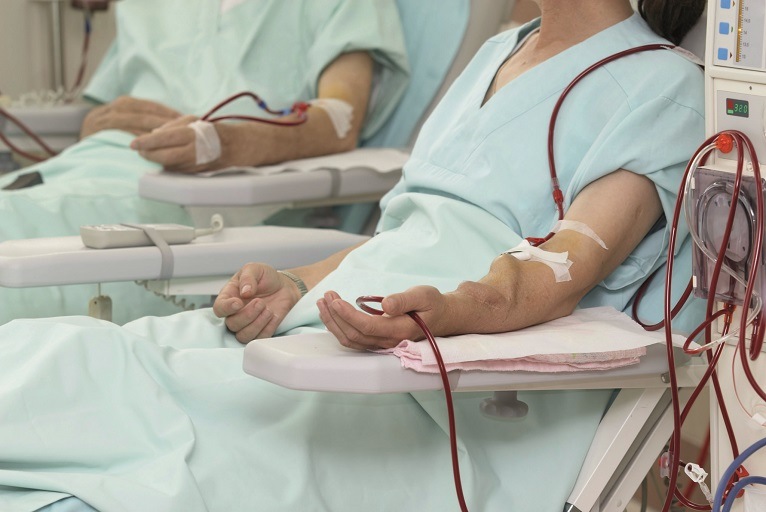
 A conservative dialysis strategy in adult patients with acute kidney injury requiring dialysis (AKI-D), resulted in an increased rate of kidney function recovery at hospital discharge compared to a standard approach.
This is among the results of the LIBERATE-D randomised clinical trial, which saw patients only receiving haemodialysis or haemofiltration when specific metabolic or clinical indications—including serum nitrogen level, hyperkalaemia, or arterial blood gas pH levels—were met. This, conservative, strategy, was compared to a conventional approach whereby patients received dialysis three times per week until urine output or creatinine clearance criteria were met.
Writing in the Journal of the American Medical Association (JAMA), study author Kathleen D Liu (University of California San Francisco, San Francisco, USA) and colleagues state that the results suggest the targeted amount of dialysis for patients with AKI-D should be more nuanced than indicated by current guidelines. However, they acknowledge that testing a conservative dialysis strategy in a larger clinical trial will be necessary to validate the findings.
The multicentre, unblinded, randomised superiority trial, which took place between 2020 and 2025 at four US centres enrolled AKI-D patients who had a baseline glomerular filtration rate >15mL/min/1.73m2, had already initiated kidney replacement therapy, and were haemodynamically stable, with planned intermittent haemodialysis. A total of 909 patients were assessed for eligibility, with 220 ultimately undergoing randomisation and treatment.
The study’s primary endpoint was the unadjusted kidney function recovery at hospital discharge, defined as being alive and not receiving dialysis, with at least 14 consecutive days without dialysis. Prespecified key secondary endpoints were the number of dialysis sessions per week and the number of dialysis-free days to day 28.
In their JAMA paper, Liu and colleagues report that patients had a mean age of 56 years, 67% were male, and the mean estimated glomerular filtration rate was 64.8mL/min/1.73m2 at baseline.
Results showed that in the conservative dialysis intervention group 64% achieved kidney function recovery at hospital discharge vs. 50% in the conventional dialysis control group. Additionally, patients in the conservative dialysis group received fewer dialysis sessions per week with a median of 1.8 vs. 3.1 in the standard strategy group and recovered earlier, with an average of 21 vs. 5 consecutive dialysis-free days to day 28.
The authors write that their findings call into question current guidelines, which recommend thrice-weekly dialysis, data for which were based on patients with AKI-D who were much more acutely ill than the LIBERATE-D cohort but for whom survival was a much greater consideration than recovery of kidney function.
“In contrast, none of the LIBERATE-D study participants were receiving vasopressors, and none required mechanical ventilation via endotracheal tube at enrol,” Liu et al write. “They also often had native kidney clearance, which the guidelines generally did not consider. The results of the present study suggest there should be different Kt/V targets for different subsets of patients with AKI-D, especially those in early stages of recovery of kidney function.”
The authors acknowledge that their findings are limited by several factors, including the lack of blinding, and potential imbalances in the groups due to the sample size. A larger clinical trial testing a conservative dialysis strategy would be an important area of investigation, they state.