
 Research published in Nature Medicine describes the immune system’s reactions in detail in the first living patient to receive a genetically modified pig kidney transplant.
The study demonstrates the feasibility of this type of graft but indicates that controlling initial rejection alone is insufficient, researchers have claimed. This is because even with immunosuppressants, continuous activation of innate immunity—the body’s first line of defense, especially macrophages, which react to any threat—can compromise long-term survival.
Through transcriptomic, proteomic, metabolomic, and spatial analyses, the scientists have determined that new strategies are necessary to achieve long-term survival and favourable clinical outcomes. They recommend combining therapies that target innate immunity with advanced genetic engineering in donor pigs. They also suggest preventing early T-lymphocyte-mediated rejection and implementing more sensitive monitoring approaches.
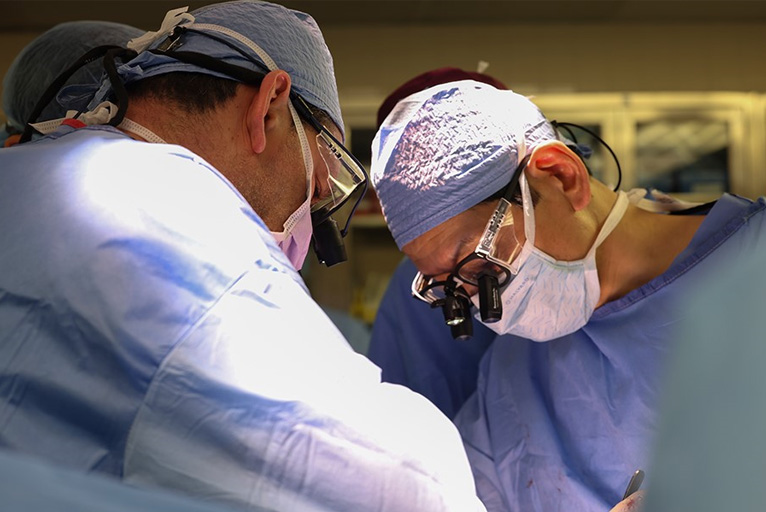
In March 2024, the first living patient to receive a pig kidney was a 62-year-old man with end-stage kidney disease who underwent surgery at Massachusetts General Hospital, which is affiliated with Harvard Medical School in Boston. Brazilian nephrologist Leonardo Riella, one of the article’s corresponding authors, led the team. The article was published on January 8 in the scientific journal Nature Medicine. The patient died two months later; the probable cause was previous chronic myocardial fibrosis.
“The main finding of the study was the detailed, unprecedented, high-resolution characterisation of the human immune response following the transplantation of a genetically modified pig kidney into a living patient. The results show that, for xenotransplantation to become a safe and lasting clinical option, controlling only adaptive immunity, as we traditionally do in transplants between humans, is insufficient. Specific strategies must also be developed to modulate the innate immune response and ensure the prolonged survival of xenogeneic grafts in humans,” said Thiago Borges, a professor and researcher at Massachusetts General Hospital and Harvard Medical School, as well as the corresponding author of the article.
To comprehensively evaluate the response triggered by renal xenotransplantation, the researchers characterised the recipient’s immune profile by cross-referencing information obtained from clinical analyses with information from proteomics and metabolomics, which includes sugars, lipids, amino acids, and other metabolites.
They observed that, in the first week after surgery, the patient’s body recognised the transplanted organ as “foreign” and activated cellular rejection, a specific type of defense conducted mainly by T-lymphocytes. This process can damage the transplanted organ and was identified and controlled with immunosuppressive drugs.
The study showed that although no more severe rejection (mediated by antibodies) occurred, the immune system remained partially active, especially in monocytes and macrophages. This reveals a central and hitherto underestimated role of innate immunity in xenotransplant rejection.
This rejection was not detected through blood tests. However, tests measuring DNA fragments from the transplanted organ in the bloodstream indicated kidney damage. Based on these results, the group suggests that levels of porcine donor-derived cell-free DNA (dd-cfDNA) could serve as a potential biomarker for this issue. In the case analysed, the pig kidney had 69 genetic modifications to increase immune compatibility.
“We demonstrated that DNA fragments from the pig kidney circulating in the patient’s blood can be used as a sensitive and non-invasive marker of rejection. This opens up the possibility of monitoring the graft in real time, which potentially reduces the need for biopsies,” Borges explains.
Persistent activation of innate immunity was also observed, with signs of ongoing inflammation. Despite advances in treatment, the findings suggest that current treatments are still unable to fully control immune responses.
“This study was important because it provided a broad view of all the molecular and cellular changes that occurred during the transplant. This can help guide and improve the efficiency of immunosuppression,” says Helder Nakaya, senior researcher at the Albert Einstein Jewish-Brazilian Hospital and one of the authors of the article.