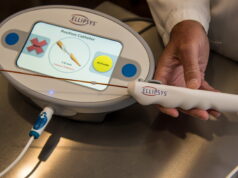
 Healionics has announced 12-month clinical results in the ongoing human trial of its STARgraft arteriovenous (AV) graft. STARgraft is a new AV graft technology that Healionics says is designed to provide kidney failure patients with a “safer and more reliable way” to access the bloodstream for haemodialysis treatment. It’s press release states that its design is aimed at resisting the most common causes of failure in on-market AV grafts: flow blockage and infection.
The company states that, after refinement of the device over a series of clinical trials, STARgraft is showing “remarkable promise in addressing these issues and reducing the need for interventions to maintain function”. The cohort of twelve patients implanted with the current version of STARgraft has maintained 100% primary unassisted patency (PUP) through 12 months post-implant, meaning zero interventions were required to maintain sufficient blood flow for dialysis therapy. The STARgraft devices have also maintained 0% infection rate.
These successful outcomes are heralded by Healionics as indicative of the potential to significantly improve upon the current standard of care. Nearly 60% of all on-market AV grafts suffer flow blockage or require surgical intervention to maintain flow within the first 12 months after implant, and 9% of these devices become infected per year, according to an extensive review of historical literature.
Healionics chief technology officer (CTO), Andrew Marshall, commented on the announcement, stating: “Achieving an AV graft design that reached the 12-month clinical endpoint with 100% unassisted functional performance and no need for surgical interventions is a huge milestone for our team. It’s a big step toward addressing a major problem that has frustrated the vascular access field for decades.”
The clinical trial is ongoing, with continued periodic patient follow-up exams to monitor longer-term performance. These results are slated to be presented at the Controversies in Dialysis Access Symposium (CiDA, 3–5 October, Washington D.C., USA).