 Researchers have tested a new method of assessing arteriovenous fistula (AVF) dysfunction, using a small acoustic sensor to detect vibrational differences in blood flow between dysfunctional and restored AVFs, a technique that may serve as a low-cost addition to current vascular access surveillance methods.
Writing in the Journal of Vascular Access (JVA), Justin K Liew (University of Western Australia, Perth, Australia) and colleagues detail the findings of an exploratory pilot study using a haemodialysis access vibration and sound evaluation (HAVSE) device—a surface accelerometer that is placed at locations around the anastomosis, outflow vein and non-stenotic reference site—to quantify mechanical vibrational signals generated by AVF blood flow.
The investigators used the device to examine whether relative changes in surface vibrational amplitude differed before and after angioplasty, if these patterns varied across perianastomotic, outflow, and central venous stenoses, and whether surface vibration could ultimately identify haemodynamically significant stenosis in AVFs.
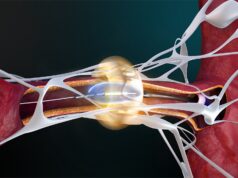
“AVFs remain vulnerable to progressive dysfunction driven by endothelial injury, neointimal hyperplasia, and haemodynamic stress, which result in juxta-anastomotic or outflow stenoses that disrupt laminar flow, increase turbulence, and reduce blood flow access,” they write in their JVA paper.
Most centres rely primarily on physical examinations supplemented by selective ultrasound or angiography by way of AVF surveillance, Liew et al note, though recent studies have explored the quantification of vascular acoustic signatures using phonoangiography and demonstrated that stenotic AVFs exhibit characteristic sound frequency and intensity changes.
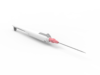
The HAVSE system consists of a surface accelerometer enclosed within a stabilised casing that includes fixed protruding rims to prevent compression, a dampening sponge to minimise movement artifacts and a stable contact platform to improve signal fidelity.
The investigators prospectively enrolled 19 adults with dysfunctional AVFs who were scheduled to undergo angioplasty at the Royal Perth Hospital, taking HAVSE recordings immediately before and after their interventions. Stenoses were categorised as perianastomotic, outflow or central.
What they observed was that in isolated perianastomotic stenosis, postoperative vibrational amplitude decreased, consistent with reduced turbulence following angioplasty, whilst in isolated outflow stenosis, the postoperative amplitude increased. Multifocal disease produced heterogeneous signals, and central venous stenosis did not generate reproducible surface vibrational characteristics.
“HAVSE has significant potential as an inexpensive and portable AVF surveillance adjunct, particularly in resource-limited settings,” the study’s authors write, summing up their findings. “Importantly, the device can support bedside or dialysis-unit assessment, at-home monitoring, and early detection of access dysfunction.”
The study has some limitations, they note, including the small sample size, unblinded design, exclusion of arteriovenous grafts (AVGs), manual sensor placement, non-calibrated measurement units, univariate analysis only and the absence of duplex ultrasound or correlation with clinical outcomes.
Although preliminary and based upon a small sample size and early methodology, Liew et al state that the findings of their study support the continued development, refinement and validation of vibration-based diagnostics. “Further studies are warranted to determine whether this technology can significantly improve clinical outcomes, streamline surveillance practices, and enhance long-term AVF management,” they conclude.